Senate Replaces N10/Litre Excise Duty on Sugary Drinks with Retail Price-Based Levy
 Tunde Bakare
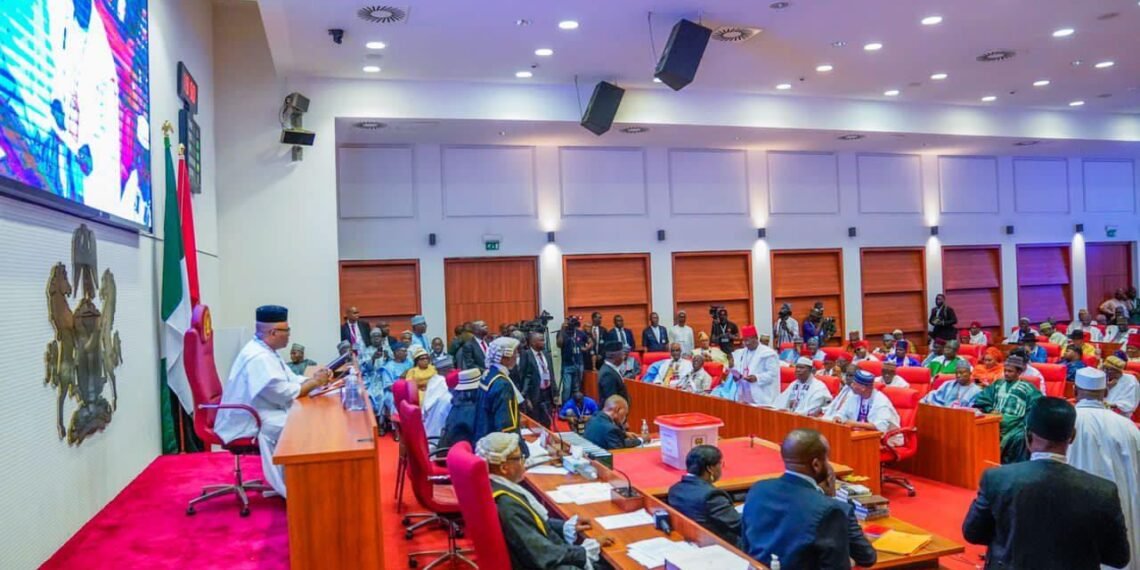
The Nigerian Senate has approved the Customs, Excise Tariff (Amendment) Bill, replacing the flat N10 per litre excise duty on sugar-sweetened beverages with a retail price-based percentage levy.
The bill, sponsored by Senator Sani Musa, scraps the fixed-rate structure that had been in place since 2021 and introduces a consumption-linked tax that will see rates determined by the Minister of Finance based on a percentage of retail prices.
Under the new framework, revenue collected from the sugar-sweetened beverages (SSB) tax will be directed specifically to health promotion, disease prevention, primary healthcare, and health insurance coverage for vulnerable populations.
The move effectively acknowledges what public health advocates have long argued — that the flat N10 per litre rate, set when inflation was far lower, had been eroded to the point where it no longer served as a meaningful deterrent to excessive sugar consumption.
N108.6 Billion Collected Under Old Regime
Between 2022 and September 2025, the National Sugar-Sweetened Beverages Tax collected N108.6 billion under the old N10 per litre framework. However, health economists noted that inflation had significantly diminished the real value of the levy, making it “too low to discourage consumption” of sugary drinks linked to rising rates of diabetes, obesity, and other non-communicable diseases in Nigeria.
The World Health Organization recommends that health taxes increase retail prices of sugary drinks by at least 20 per cent to effectively reduce consumption. International evidence from South Africa, Mexico, and the United Kingdom has demonstrated that well-designed SSB taxes can significantly reduce sugar consumption and improve public health outcomes.
Mixed Reactions from Stakeholders
Public health advocates have broadly welcomed the Senate’s decision, describing it as a progressive step toward using fiscal policy to address Nigeria’s growing burden of non-communicable diseases. The Nigeria Health Watch and other civil society organisations had campaigned for a more stronger excise regime on sugary drinks.
However, the Organised Private Sector (OPS) had urged lawmakers to withdraw the bill, arguing that additional taxes on manufacturers would increase operational costs and potentially lead to job losses in the beverage industry. Manufacturers of soft drinks and fruit juices are expected to be most affected by the new levy regime.
Senator Sani Musa defended the bill during plenary, emphasising that the revenue from the tax would fund critical health infrastructure and insurance coverage for Nigeria’s most vulnerable citizens. “This is not about punishing industry. It is about saving lives and strengthening our healthcare system,” he said on the floor of the Senate.
President Bola Tinubu is expected to assent to the bill after clean-up by the legislative drafting office.
Sources: TheCable, Arise News, Nairametrics, The Nation, News Diary

Written by
Tunde Bakare
Political journalist covering Nigerian politics, the National Assembly, and electoral developments. Political Editor at NaijaTrend.
You May Also Like
 Politics
Akpabio Petitions DSS Over Alleged Anti-North Statement
Senate President Godswill Akpabio has asked the Department of State Services to investigate a statement allegedly attrib…
 Politics
INEC Plans IDP Voting Centres In Nine Plateau LGAs
INEC says it is preparing voting centres for internally displaced persons in nine local government areas of Plateau Stat…
 Politics
Kaduna Ministries Begin 2027 Budget Presentations
Kaduna State ministries have begun presentations for the 2027 budget, with the government saying human capital developme…
 Politics
Sanwo-Olu Declares Emergency On Lagos Waste Management
Lagos Governor Babajide Sanwo-Olu has declared a limited emergency on waste management after weeks of pressure on refuse…