Telecom Operators Lose Billions as Infrastructure Theft Hits 650-Plus Incidents in One Year
 Emeka Nwosu
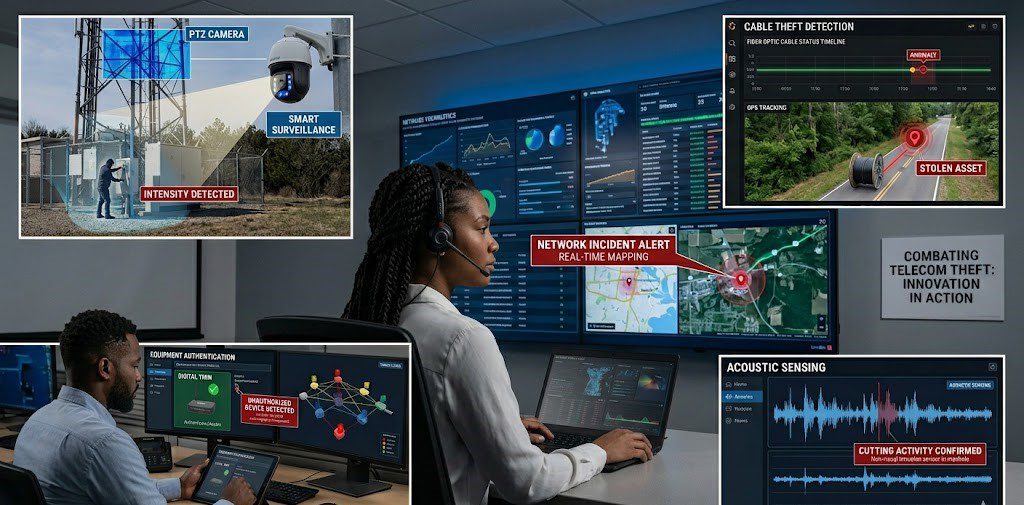
Mobile network operators in Nigeria are losing billions of naira every year to theft of critical telecom equipment, and the numbers keep getting worse. Regulatory data from the Nigerian Communications Commission shows that more than 650 power-related assets were stolen in 2025 alone, including generators, batteries, and other equipment that keeps base stations running.
In a country where the national grid is unreliable at best, diesel generators and backup batteries are what keep phone calls connected and data flowing. Losing them does not just cost money. It knocks sites offline entirely.
Playing defence
Tony Emoekpere, president of the Association of Telecommunications Companies of Nigeria, said operators have been forced into a defensive posture, spending heavily on security rather than expanding the network.
“Operators are responding, but largely in a defensive mode,” he said. “What you are seeing now is a combination of increased physical security, technology deployment, and changes to how sites are designed and powered.”
Operators are putting guards at base stations, teaming up with local vigilante groups, reinforcing enclosures, and installing remote monitoring systems that flag tampering in real time. Some are moving away from standalone batteries, which are easy to walk off with, toward integrated hybrid power setups. But even solar panels and hybrid systems are getting stolen now.
Subscribers bear the cost
When a site loses its generator or batteries, it goes dark. Calls drop. Data crawls. In cities, traffic can sometimes be rerouted to nearby towers, but that leads to congestion and slower speeds. In rural areas, a stolen battery can mean total blackout.
“We are spending more to protect infrastructure than we should, and that is not sustainable,” Emoekpere said. “These losses run into billions of naira annually. While operators are absorbing a lot of it for now, it inevitably feeds into the overall cost structure of the industry.”
That means subscribers are effectively paying twice: once through worse service, and again through the higher prices that inevitably follow when operators can no longer absorb the losses.
Law exists, enforcement does not
Telecom infrastructure is already classified as Critical National Infrastructure under Nigerian law. The problem, according to ATCON, is that nobody is enforcing it. The association wants telecom theft treated as economic sabotage, not petty crime. It wants coordinated protection from the police and civil defence corps, real arrests and prosecutions, and a crackdown on the informal markets where stolen batteries and cables are resold.
ATCON, ALTON, the NCC, and the Nigeria Security and Civil Defence Corps are sharing intelligence more closely now. But without visible deterrence, the theft-and-deterioration cycle will keep grinding down Nigeria’s digital infrastructure.
Sources: Punch, Prima News, Technext24

Written by
Emeka Nwosu
Tech journalist covering Nigerian startups, fintech regulation, digital policy, and innovation. Tech Writer at NaijaTrend.
You May Also Like
 Tech
Tech
FG Moves To Make NIN Nigeria’s Sole National Identity
The Federal Government is pushing for full implementation of the NIMC Act 2026, with the National Identification Number…
Tech
Tunji-Ojo Explains What NIMC Act 2026 Means For Nigerians
Interior Minister Olubunmi Tunji-Ojo says the new National Identity Management Commission Act 2026 will expand access to…
 Tech
Tech
Tinubu Establishes National Health Technology Office, Appoints Obi Adigwe Coordinator
President Bola Tinubu has approved the creation of the National Health Technology and Data Analytics Office and appointe…
 Tech
Tech
NCC, CAC Require Prior Approval For Telecom Share Transfers Of 10% Or More
The Nigerian Communications Commission and the Corporate Affairs Commission have directed telecom companies to obtain re…