Zipline Targets 100 Million Nigerians with 12 New Drone Hubs by 2028
 Emeka Nwosu
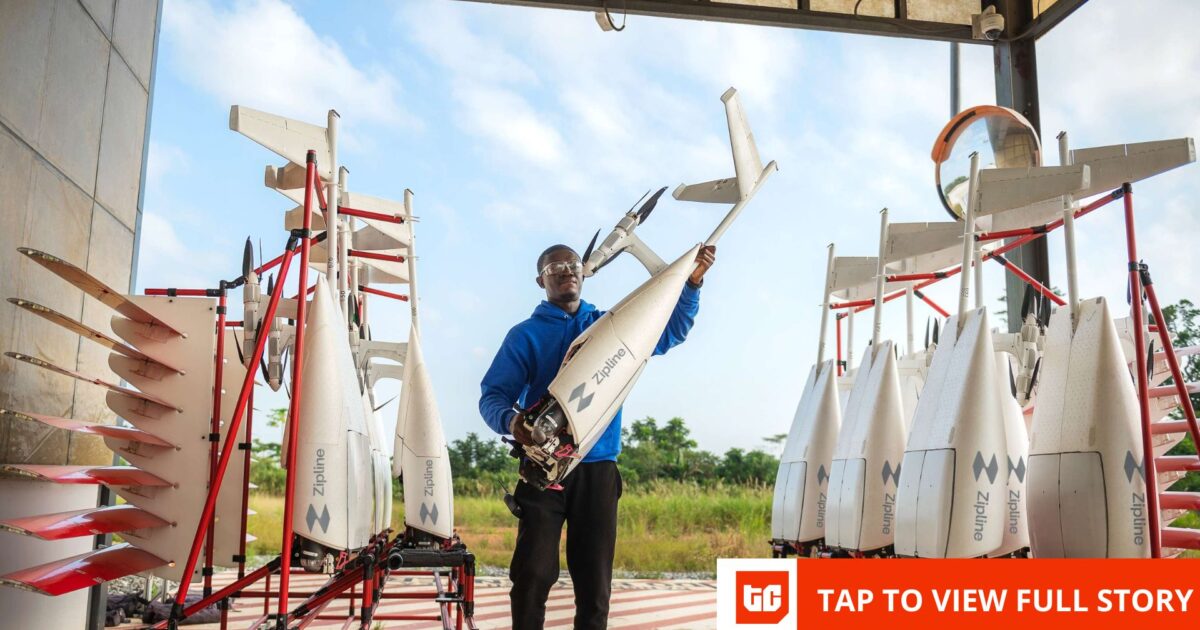
Health-tech and logistics company Zipline has announced plans to build 12 additional distribution centres across Nigeria, expanding its network from three operational hubs to 15 facilities nationwide and targeting coverage of 100 million Nigerians by 2028.
The disclosure was made by Anthonio Pinheiro, Zipline’s newly appointed Nigeria Country Director, in a virtual interview with TechCabal on Wednesday.
“Right now, with the three states we operate in — Kaduna, Cross River and Bayelsa — we are serving over 1,300 health facilities and about six million people,” Pinheiro said. “The vision is to build an additional 12 distribution centres, which would serve up to 20,000 facilities and give access to 100 million people.”
The expansion marks a strategic shift from isolated drone-delivery pilots to the early buildout of a nationwide healthcare logistics network in Nigeria — one that could help solve the country’s chronic last-mile delivery gaps by connecting tens of thousands of health facilities to faster access to medicines, vaccines, and essential medical supplies.
From pilots to national infrastructure
Zipline launched operations in Kaduna State in 2022 before expanding into Cross River and Bayelsa. Instead of negotiating isolated deployments with individual states, the company is now pursuing a federal-scale framework that would allow states to integrate more seamlessly into a national autonomous delivery network.
That transition is being supported by a broader partnership involving Nigeria’s Federal Ministry of Health and the U.S. government, which backed Zipline’s African expansion through a grant initiative covering five African countries.
Pinheiro described Zipline as an AI robotics infrastructure company rather than simply a healthcare startup. “A lot of people think about drones, but our drones are autonomous. Our entire infrastructure is built on artificial intelligence and robotics,” he said.
While healthcare remains the company’s current focus, Pinheiro hinted that agriculture, animal health, e-commerce, and broader logistics could become future verticals once the infrastructure matures.
Tackling the medical supply chain problem
At the centre of Zipline’s Nigerian operations is a problem that has plagued the country’s healthcare system for decades: unreliable medical supply chains. Across many rural communities, health facilities frequently run out of vaccines, blood supplies, anti-venom, malaria medication and maternal care products.
Zipline’s model attempts to eliminate those gaps through a network of automated distribution hubs, cold storage facilities and AI-powered inventory tracking systems. Instead of forcing hospitals to maintain costly storage facilities and large medical inventories, Zipline manages supplies centrally and delivers medicines whenever needed.
“If a hospital requests 20 vaccine doses and 25 patients show up, they can call us, and we can deliver the additional five within 30 to 45 minutes,” Pinheiro explained.
According to Zipline, vaccine stockouts in supported areas have fallen significantly, while maternal mortality rates in supported facilities have dropped by more than 50 percent due partly to faster blood deliveries.
Operating outside the grid
One of Zipline’s achievements in Nigeria has been its ability to operate largely outside the country’s unreliable electricity grid. The company says its facilities in Kaduna and Cross River are now fully solar-powered, supported by backup energy redundancy systems.
By partnering with renewable energy providers, Zipline says it has eliminated the need for tens of thousands of litres of diesel consumption monthly at some sites, effectively turning its hubs into mini energy ecosystems in rural areas.
The regulatory environment
Drone regulation remains one of the biggest barriers to scaling autonomous aviation across Africa, particularly in countries with security sensitivities around unmanned aerial vehicles. In Nigeria, all drone operators must obtain an End-User Certificate (EUC) from the Office of the National Security Adviser before approaching the Civil Aviation Authority for a permit.
However, Pinheiro noted that Nigeria’s regulatory posture has become increasingly collaborative, arguing that the country is approaching a “perfect intersection” of policy readiness, market demand and technological maturity.
When Zipline first entered Nigeria in 2022, the company’s operations looked like another ambitious health-tech pilot. Four years later, it is preparing for what could become the largest drone delivery infrastructure project in Africa.
Source: TechCabal

Written by
Emeka Nwosu
Tech journalist covering Nigerian startups, fintech regulation, digital policy, and innovation. Tech Writer at NaijaTrend.
You May Also Like
 Tech
Tech
FG Moves To Make NIN Nigeria’s Sole National Identity
The Federal Government is pushing for full implementation of the NIMC Act 2026, with the National Identification Number…
Tech
Tunji-Ojo Explains What NIMC Act 2026 Means For Nigerians
Interior Minister Olubunmi Tunji-Ojo says the new National Identity Management Commission Act 2026 will expand access to…
 Tech
Tech
Tinubu Establishes National Health Technology Office, Appoints Obi Adigwe Coordinator
President Bola Tinubu has approved the creation of the National Health Technology and Data Analytics Office and appointe…
 Tech
Tech
NCC, CAC Require Prior Approval For Telecom Share Transfers Of 10% Or More
The Nigerian Communications Commission and the Corporate Affairs Commission have directed telecom companies to obtain re…