Senate Defections: Umeh, Abaribe Dump ADC as Akpabio Declares Party Dead
 Tunde Bakare
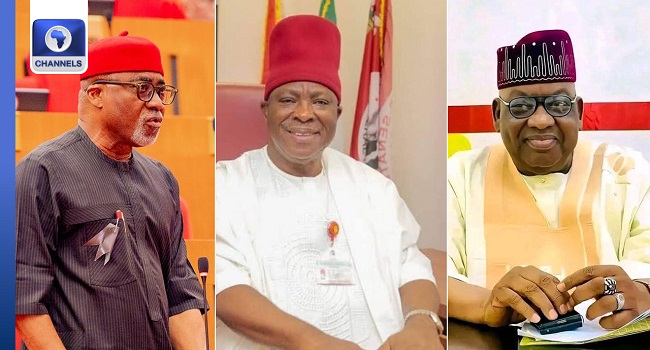
The Nigerian Senate saw a wave of defections on Tuesday, May 5, as three senators publicly dumped the African Democratic Congress (ADC) for other parties — triggering Senate President Godswill Akpabio to declare, bluntly, that the ADC is “dead.”
Who Left and Where They Went
Senator Victor Umeh, who represents Anambra Central, formally notified the Senate of his move to the National Democratic Congress (NDC). His reason: unending litigation within the ADC that has made it impossible to run as a party. Umeh is a former national chairman of APGA and one of the more cerebral voices in the upper chamber, so his exit carries weight beyond mere political math.
Senator Enyinnaya Abaribe, representing Abia South, moved to the Labour Party. This is actually Abaribe’s second defection in quick succession — he had previously moved to the ADC before deciding Labour Party was the better fit. His zigzagging reflects the broader instability within Nigeria’s opposition space.
The third departure was Senator Rufai Hanga, Deputy Minority Whip, who came from the New Nigeria Peoples Party (NNPP) and also headed for the NDC.
Akpabio’s Verdict
Senate President Akpabio, announcing the defections from the podium, did not mince words. “ADC is dead,” he reportedly said — a line that will follow the party into every future political conversation. It may be blunt, but the numbers back him up. The ADC has been hemorrhaging legislators at an alarming rate since the 2023 elections, and Tuesday’s exits add to a tally that makes the party’s survival as a credible force genuinely questionable.
Bigger Pattern: NDC on the Rise
The same day in the House of Representatives, Speaker Tajudeen Abbas announced the defection of over a dozen lawmakers to the NDC from the ADC. Names like Yusuf Datti, Uchenna Okonkwo, Adamu Wakili, Lilian Orogbu, and several others all moved to the NDC in a coordinated sweep. One lawmaker, Leke Abejide of Kogi State, went in the opposite direction — to the APC.
The NDC is clearly positioning itself as the destination party for opposition politicians looking for a viable platform ahead of 2027. Whether it can convert that momentum into actual electoral muscle remains to be seen.
What This Means for 2027
Nigeria’s political balance is shifting fast. The ADC, which was projected to be a major third force after 2023, is now struggling to hold its caucus together. The Labour Party under Peter Obi still has a base but has lost some of its post-2023 shine. Meanwhile, the NDC — a relatively newer player — is vacuuming up discontented legislators who need a home.
The defections also expose a deeper problem: Nigerian lawmakers remain largely transactional in their party affiliations. Ideology barely factors in. What matters is positioning, access, and survival ahead of the next election cycle.
Sources: Channels TV, The Cable, Punch, Guardian Nigeria

Written by
Tunde Bakare
Political journalist covering Nigerian politics, the National Assembly, and electoral developments. Political Editor at NaijaTrend.
You May Also Like
 Politics
Akpabio Petitions DSS Over Alleged Anti-North Statement
Senate President Godswill Akpabio has asked the Department of State Services to investigate a statement allegedly attrib…
 Politics
INEC Plans IDP Voting Centres In Nine Plateau LGAs
INEC says it is preparing voting centres for internally displaced persons in nine local government areas of Plateau Stat…
 Politics
Kaduna Ministries Begin 2027 Budget Presentations
Kaduna State ministries have begun presentations for the 2027 budget, with the government saying human capital developme…
 Politics
Sanwo-Olu Declares Emergency On Lagos Waste Management
Lagos Governor Babajide Sanwo-Olu has declared a limited emergency on waste management after weeks of pressure on refuse…