Nigeria Pushes for Data Sovereignty and Local Tech Capacity — NITDA DG
 Emeka Nwosu
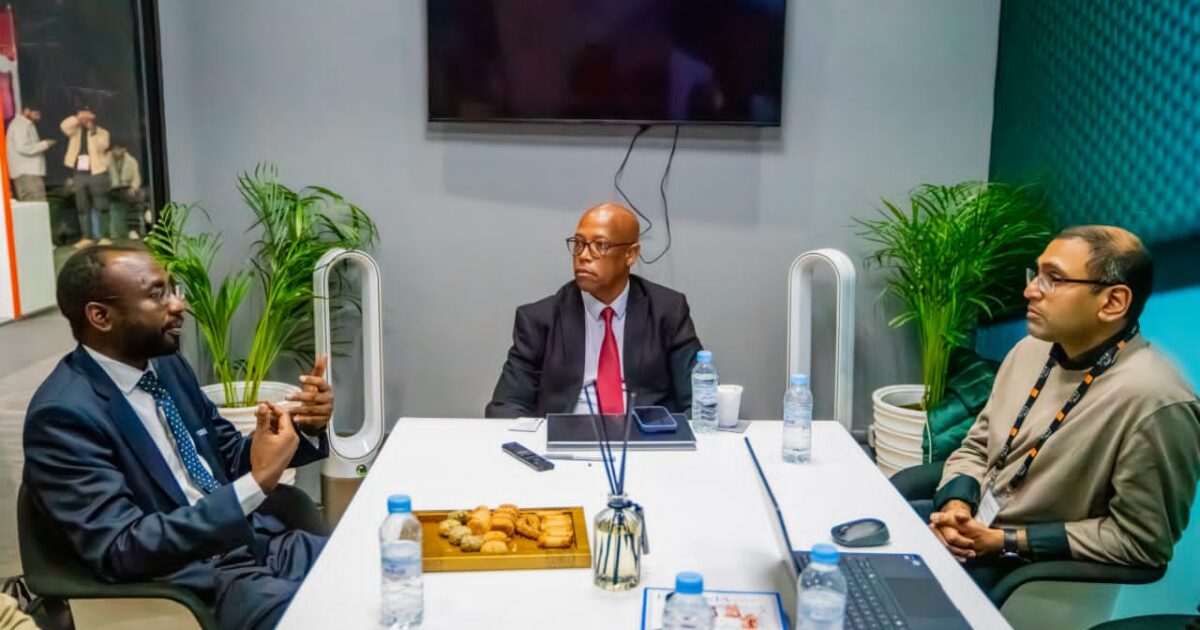
Nigeria is pushing to strengthen its national software infrastructure and digital governance framework, with NITDA Director-General Kashifu Inuwa making the case that data sovereignty and local tech capacity matter more than taking sides in global rivalries.
Speaking during a meeting with Ericsson’s management at GITEX Africa in Morocco, Inuwa laid out a vision that is less about banning foreign technology and more about ensuring Nigeria retains control over its digital future.
Control, not exclusion
“We are building our national software infrastructure. We are coming up with very high-standard regulatory policies that will help us build capacity for digital software integration,” Inuwa said. “For me, it is not about politics. It is not about geo-tech politics. It is not about banning China. It is about how we, as a country, have control and are able to shape our digital future.”
The message was direct: Nigeria wants international tech companies to operate in the country, but on terms that ensure local value creation. “We are not saying we are banning hyperscalers from coming. We want them to come, work with local partners, create value in Africa, and let us capture that value here,” he said.
Learning from the EU
Inuwa pointed to the European Union’s Digital Markets Act, Digital Services Act, and Data Governance Act as examples of regions asserting digital sovereignty through structured policy. He noted that Nigeria already has an executive order designating all digital infrastructure as national critical infrastructure, though building a fully sovereign system takes time.
“Even the EU did not achieve it overnight,” he acknowledged.
Keeping intelligence at home
A central theme of the discussion was keeping data and digital capabilities within Nigeria. “We want to keep the intelligence in our country. We want to be part of creating value, not just receiving technology,” Inuwa said. “We don’t want a repeat of previous industrial revolutions where Africa was left behind.”
Debates around data ownership in emerging technologies — particularly who controls machine-generated data — are shaping the next phase of Nigeria’s regulatory direction, with clearer policy expected in the coming months.
On the industry side, Ericsson’s Amos Haddebe outlined four pillars of a Memorandum of Understanding signed with Nigeria in October 2024: a joint innovation hub, a national hackathon, digital skills development programmes, and exchange of best practices. The national hackathon, launched under the Vice President’s supervision, is already underway.
Sources: Prime Times, BusinessDay

Written by
Emeka Nwosu
Tech journalist covering Nigerian startups, fintech regulation, digital policy, and innovation. Tech Writer at NaijaTrend.
You May Also Like
 Tech
Tech
FG launches 11-character digital postcode system for Nigerian addresses
The Federal Government has launched a National Digital Alphanumeric Postcode System that assigns an 11-character code to…
 Tech
Tech
NIMC rejects viral claims of NIN database breach
The National Identity Management Commission has rejected a viral claim that Nigeria’s National Identification Number dat…
 Tech
Tech
FG Sets October 1 For 100MB Daily Free Data For Students
Nigerian students are expected to begin receiving 100 megabytes of free daily data from October 1, 2026, for access to a…
 Tech
Tech
FG Moves To Make NIN Nigeria’s Sole National Identity
The Federal Government is pushing for full implementation of the NIMC Act 2026, with the National Identification Number…