NNPC Completes OB3 Gas Pipeline River Niger Crossing After 10 Years
 Amina Garba
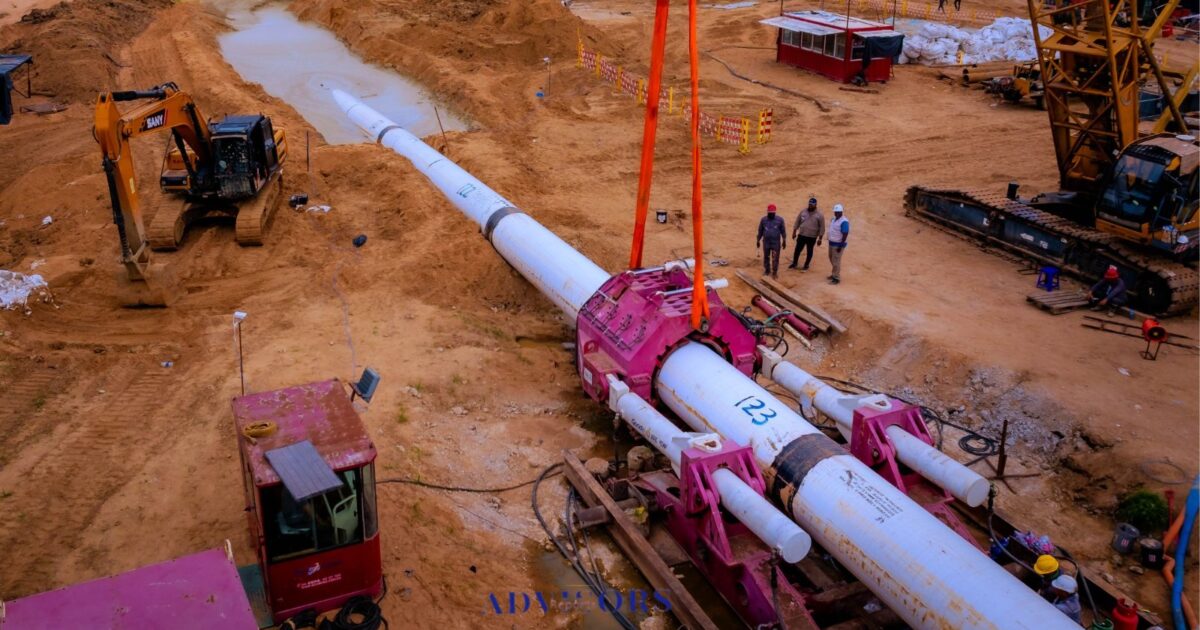
After more than a decade of delays, Nigeria’s national gas infrastructure has cleared one of its biggest engineering bottlenecks. The Nigerian National Petroleum Company Limited (NNPCL) announced on Thursday that its Gas Infrastructure Company (NGIC) has successfully completed the River Niger crossing of the 130-kilometre Obiafu-Obrikom-Oben (OB3) Gas Pipeline.
The project began in 2016. It has been stuck at various stages since, making this week’s announcement a genuine milestone rather than a routine update.
What the OB3 Pipeline Does
The OB3 is a backbone infrastructure project — a $700 million pipeline designed to connect the eastern gas network to western and northern Nigeria. With a capacity of 2 billion standard cubic feet per day, it links into the Ajaokuta-Kaduna-Kano (AKK) pipeline to extend gas connectivity further north.
The River Niger crossing was the hardest section. Traversing a major river with pipelines at that scale requires specialised engineering and has historically been where projects stall in Nigeria. The AKK pipeline completed its own River Niger crossing in June last year.
What Comes Next
NNPCL’s Group Chief Executive Officer, Bayo Ojulari, said the crossing would directly unlock over 500 million standard cubic feet of incremental gas supply for the domestic market. That gas is expected to feed power generation, industrial users, and West African export markets.
“The completion of the OB3 River Niger Crossing is a defining milestone for Nigeria’s gas infrastructure,” Ojulari said. “By successfully traversing one of the most technically challenging sections of the project, we have unlocked a critical link that will enhance gas supply reliability.”
Why It Matters
Nigeria sits on some of the world’s largest natural gas reserves but has long struggled to move that gas where it is needed. Power plants run below capacity. Industries pay premium prices for alternative fuel. Gas flaring continues in the Niger Delta.
Getting OB3 fully operational will not solve all of that overnight, but it removes a physical barrier that has blocked progress for years. The question now is how quickly NNPCL can move from this crossing milestone to full pipeline commissioning — and whether gas actually reaches the grid at the volumes promised.
Ten years is a long time to wait for a pipeline. Nigeria cannot afford to wait that long for the next one.
Sources: The Nation, Daily Post, Fresh Angle

Written by
Amina Garba
Financial reporter covering CBN policy, oil and gas, government budgets, and macroeconomic trends. Business Writer at NaijaTrend.
You May Also Like
 Business
SERAP Sues NNPCL Over Alleged ₦211tn Unexplained Oil Money
SERAP wants a Federal High Court order compelling NNPCL to explain more than ₦211 trillion recorded in its 2023 accounts…
 Business
Shettima Says Nigeria Will Replicate Benin Agro-Industrial Model
Vice President Kashim Shettima says Nigeria will draw lessons from Benin Republic’s Glo-Djigbé Industrial Zone as the Fe…
 Business
Dangote Refinery Raises $2.5bn In Private Equity Placement
Dangote Petroleum Refinery and Petrochemicals says it has raised about $2.5 billion in fresh equity through a private pl…
 Business
Dangote Refinery Restores Naira Petrol Loading at ₦1,215 Per Litre
Dangote Petroleum Refinery has resumed naira-denominated petrol loading for marketers after a week-long suspension, sett…