Nigeria’s Capital Importation Surges 84% to $10.37 Billion in Q1 2026 — NBS
 Amina Garba
—
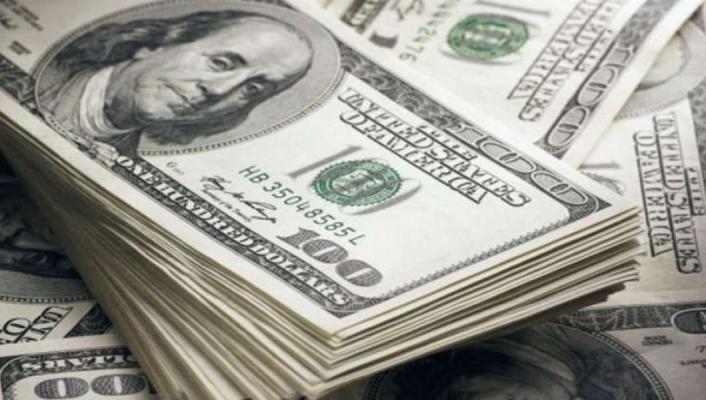
Nigeria attracted $10.37 billion in capital importation in the first quarter of 2026, representing an 83.83 per cent increase from the $5.64 billion recorded in the same period in 2025, according to the National Bureau of Statistics.
The latest Capital Importation Report released by the bureau on Wednesday also showed that capital inflows rose by 60.97 per cent from $6.44 billion recorded in the fourth quarter of 2025, reflecting renewed foreign investor interest in the country’s financial markets.
However, the report revealed that Foreign Direct Investment (FDI), often regarded as the most stable form of capital inflow because of its long-term nature, contributed the least. FDI stood at $135.08 million, accounting for just 1.30 per cent of total capital importation.
Portfolio investment remained the dominant source of foreign capital, accounting for $9.86 billion or 95.09 per cent of the total amount imported into the economy. Other investments, which include loans and trade credits, amounted to $374.48 million, representing 3.61 per cent.
A further breakdown showed that money market instruments attracted the largest share of portfolio investments at $6.50 billion, while investments in bonds amounted to $3.23 billion. Equity investments under the portfolio category stood at $131.81 million.
The banking sector emerged as the biggest destination for foreign capital during the quarter, attracting $7.55 billion, representing 72.79 per cent of total inflows. The financing sector followed with $2.43 billion or 23.42 per cent, while the production and manufacturing sector attracted $152.27 million.
The United Kingdom remained Nigeria’s largest source of foreign capital, accounting for $5.08 billion or 49.01 per cent of total inflows. The United States followed with $3.18 billion, representing 30.69 per cent, while South Africa accounted for $983.83 million or 9.49 per cent.
Among financial institutions, Standard Chartered Bank Nigeria Limited received the highest capital inflow during the quarter at $4.41 billion, representing 42.56 per cent of the total. Stanbic IBTC Bank Plc followed with $2.78 billion, while Rand Merchant Bank handled $930.82 million.
While the rising capital inflows are positive for foreign exchange liquidity and investor confidence, experts note that greater emphasis on attracting direct investments into manufacturing, infrastructure and other productive sectors will be critical for achieving sustainable economic growth.
Sources: Punch, Leadership, Nairametrics

Written by
Amina Garba
Financial reporter covering CBN policy, oil and gas, government budgets, and macroeconomic trends. Business Writer at NaijaTrend.
You May Also Like
 Business
Dangote Refinery Raises $2.5bn In Private Equity Placement
Dangote Petroleum Refinery and Petrochemicals says it has raised about $2.5 billion in fresh equity through a private pl…
 Business
Dangote Refinery Restores Naira Petrol Loading at ₦1,215 Per Litre
Dangote Petroleum Refinery has resumed naira-denominated petrol loading for marketers after a week-long suspension, sett…
 Business
Ibom Power Says Debt and Gas Shortage Kept 191MW Plant Largely Idle
Ibom Power Company says a prolonged gas shortage and unpaid legacy obligations left its 191-megawatt plant largely idle…
 Business
CBN Tells Senate Inflation Eased to 15.91% in June
Central Bank Governor Olayemi Cardoso told a Senate committee that headline inflation eased slightly to 15.91 per cent i…