Nigeria, US Forces Kill Senior ISIS Commander Abubakar Mainok in Lake Chad Precision Strike
 Claudia Kane
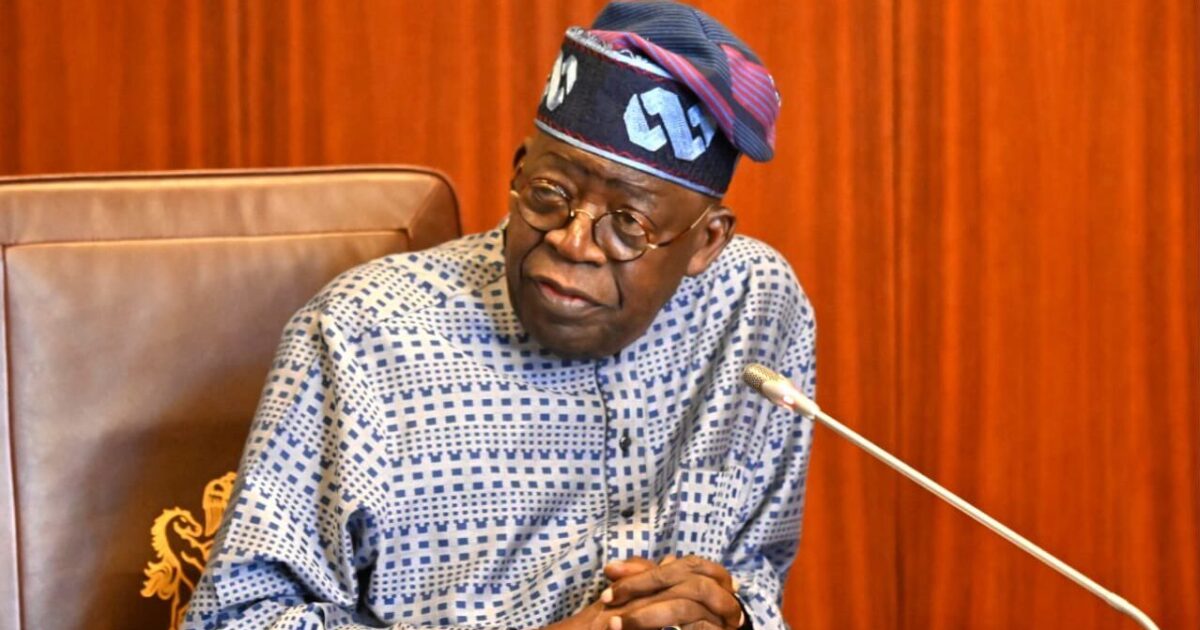
Nigeria and the United States have killed one of the most wanted terrorists in Africa — a senior ISIS commander who had operated across the Lake Chad Basin for years while evading international security forces.
President Bola Tinubu confirmed on Saturday that Nigerian forces, working alongside the United States military, conducted a precision strike that killed Abubakar Mainok, also known as Abu-Bilal al-Mainuki, a top commander of the Islamic State West Africa Province (ISWAP). The US Africa Command (AFRICOM) issued an official press release confirming the operation, describing it as “strikes against ISIS terrorists in Nigeria.”
US President Donald Trump announced the development first, stating that al-Mainuki, whom American officials described as ISIS’s second-in-command globally, had been eliminated in what he called a “complex mission” carried out by American and Nigerian forces. Several of his lieutenants were also reportedly killed during the operation.
Tinubu hailed the outcome as “a significant example of effective collaboration in the fight against terrorism,” while the Federal Ministry of Information described the strike as “successful precision strikes on foreign ISIS elements” that had been personally authorised by the president.
Who was Abubakar Mainok?
Mainok was born in 1982 in Mainok, a town near Borno State in Nigeria’s northeast, the epicentre of the country’s long-running Boko Haram and ISWAP insurgency. He rose through the ranks of the terrorist network to become one of its most strategically important figures, serving as a key link between ISWAP’s Lake Chad operations and the broader Islamic State global command structure.
The United States Treasury’s Office of Foreign Assets Control (OFAC) had designated him as a sanctioned entity, reflecting Washington’s assessment of his role in financing and coordinating terrorist operations across the Sahel. Security analysts at the Jamestown Foundation had previously identified him as ISWAP’s Sahel-based al-Furqan representative — al-Furqan is ISIS’s official media arm, a role that gave him significant influence over the group’s propaganda and recruitment pipelines.
He operated under several aliases including Abu Bilal al-Minuki and Abor Mainok, and had been tracked by intelligence services for years before Saturday’s operation.
A milestone in Nigeria-US counterterrorism cooperation
The joint operation marks a notable deepening of military cooperation between Nigeria and the United States in the fight against terrorism. AFRICOM, which coordinates US military engagement across the African continent, confirmed its direct involvement. It is an unusually explicit acknowledgement of American combat operations on Nigerian soil.
Security analysts say the death of al-Mainuki, alongside several of his lieutenants, could disrupt ISWAP’s operational coordination across the Lake Chad Basin in the short term. The Lake Chad region, which spans Nigeria, Niger, Chad, and Cameroon, has remained one of the most active insurgency zones in sub-Saharan Africa despite years of multinational military pressure.
Nigeria has faced sustained ISWAP attacks in Borno, Yobe, and surrounding states, with the group carrying out bombings, abductions, and assaults on military positions. The killing of a commander at this level is the most significant blow to the group’s leadership structure in recent memory.
What comes next
While the elimination of a senior commander is a significant tactical win, counterterrorism experts caution that decapitation strikes alone rarely end insurgencies. ISWAP has shown resilience in replacing fallen leaders, and the broader conditions — poverty, displacement, weak governance in the Lake Chad Basin — that sustain recruitment have not changed.
Still, the operation sends a clear message: Nigeria is now conducting high-value counterterrorism missions in direct partnership with the world’s most powerful military. For a country that has struggled for years with the perception that Abuja lacks the intelligence infrastructure and political will to take decisive action against ISWAP, Saturday’s announcement is significant.
The Nigerian military has not released further details on the timing or exact location of the strike. AFRICOM’s press release confirmed the operation but provided no additional operational specifics, which is standard practice for sensitive counterterrorism missions.
Sources: Premium Times, ICIR, AFRICOM, FMInfo.gov.ng, Newsposl, SundiataPost

Written by
Claudia Kane
General assignment reporter and News Editor at NaijaTrend. Covers breaking news, security, and national affairs across Nigeria.
You May Also Like
Ondo Investigates Suspected Poisoning After 24 Deaths
Ondo State authorities are investigating the deaths of 24 people in Odigbo Local Government Area after residents reporte…
 News
News
Police Hunt Suspects After Mob Kills Man In Akwa Ibom
Akwa Ibom police say they have begun a manhunt after a mob allegedly beat and set ablaze an unidentified man accused of…
 News
News
Nigerian Army Redeploys Generals, Names New Operation Hadin Kai Commander
The Nigerian Army has redeployed several senior officers and named Major General I. A. Ajose as Theatre Commander of Joi…
 News
News
NDLEA Arrests Fugitive Kingpin Linked To 49.7kg Heroin Shipment
NDLEA says Festus Ibewuike was arrested in Benin Republic and returned to Nigeria after more than two years on the run.