Nigeria Signs Revised Air Services Agreement With Morocco to Boost Flights and Tourism
 Amina Garba
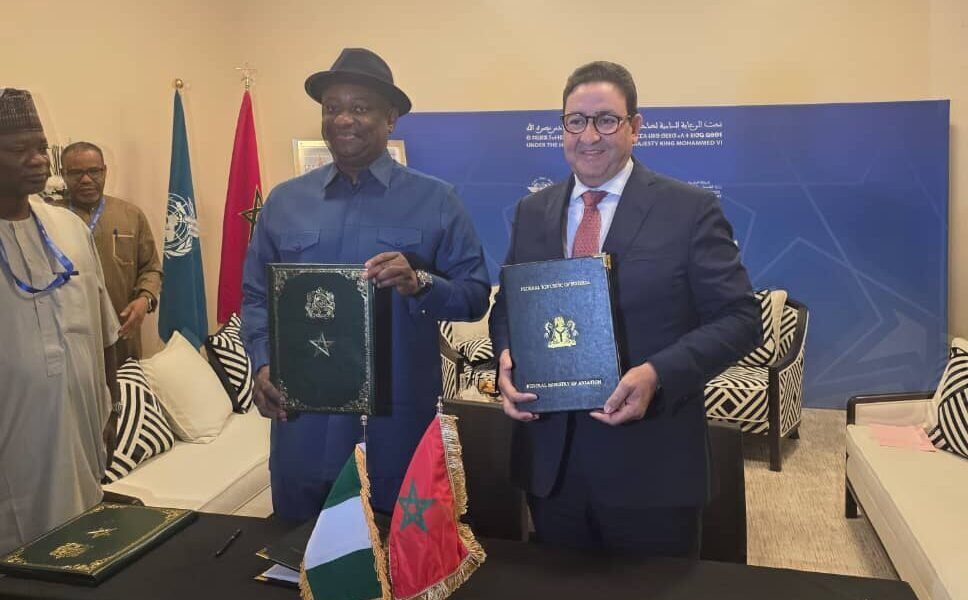
Aviation Minister Festus Keyamo has signed a revised Bilateral Air Services Agreement (BASA) with the Kingdom of Morocco during the Global Implementation Support Symposium in Marrakech, expanding flight operations and deepening tourism and trade ties between both countries.
The agreement updates the existing framework between Nigeria and Morocco to reflect current realities in global aviation. Key provisions include expanded route rights for designated airlines of both countries, increased flight frequencies, and updated safety and operational standards aligned with ICAO requirements.
What the agreement covers
Keyamo also held high-level engagements with ICAO and EU leadership during the symposium, signalling Nigeria’s intent to position itself as a key aviation hub in West Africa. This matters because the country has been trying to attract more international carriers and boost its aviation revenue, even as domestic airlines threaten shutdown over jet fuel costs.
Why Morocco matters
Morocco has been aggressively expanding its African route network through Royal Air Maroc, and the country’s tourism sector is booming. A stronger air services agreement with Morocco gives Nigerian carriers access to Moroccan airports as connecting hubs for European and North African routes. That is potentially significant for Nigerian airlines that currently rely heavily on European hubs for intercontinental connections.
The bigger picture
Nigeria’s aviation sector is caught between two pressures. The AON’s recent threat to shut down domestic operations over jet fuel costs and forex challenges underscores the domestic crisis. Meanwhile, the Iran war has pushed global aviation costs higher. A revised BASA with Morocco will not solve the domestic fuel crisis, but it does signal that the government is thinking about long-term connectivity even as short-term operational challenges threaten to ground the industry.
The agreement also positions Nigeria to benefit from the growing Morocco-Nigeria corridor, which has seen increased trade volume since the African Continental Free Trade Area (AfCFTA) came into effect. More flights mean more business travel, more tourism revenue, and more cargo capacity. All things Nigeria’s economy needs right now.
Sources: Nairametrics, Matrix NG, Arise TV

Written by
Amina Garba
Financial reporter covering CBN policy, oil and gas, government budgets, and macroeconomic trends. Business Writer at NaijaTrend.
You May Also Like
 Business
Nigeria, Cameroon Begin Joint Assessment Of Mfum-Ekok Border Post
Nigeria and Cameroon have started a joint assessment of the Ekok-Mfum One-Stop Border Post and launched a border moderni…
 Business
NCC Begins Registration Of SIM-Enabled Devices, Targets Illegal Imports
The Nigerian Communications Commission has begun registering and authenticating SIM-enabled devices as it moves to tight…
 Business
NUPRC Threatens Revocation Of Idle Flare Gas Permits
The Nigerian Upstream Petroleum Regulatory Commission has warned that companies sitting on flare gas commercialisation p…
 Business
Reps Begin Probe Into N432bn Oil Revenue Debt
The House Public Accounts Committee is investigating debts owed to NMDPRA by NNPCL and oil marketers after audit finding…