IMF Backs Nigeria’s Reforms But Warns Poverty, Food Insecurity May Worsen
 Amina Garba
The International Monetary Fund has backed Nigeria’s ongoing economic reforms but warned that poverty and food insecurity could worsen if high living costs persist.
Guardian reported that the Fund made the assessment in its 2026 Article IV Consultation report on Nigeria, released after the IMF Executive Board concluded its review on June 1.
The IMF acknowledged progress in macroeconomic stability and growth prospects, but said the gains have not yet reached many households. Vanguard’s report carried the same central warning, noting that Nigeria’s reforms may be showing results while poverty continues to rise.
According to Guardian, the IMF estimated that Nigeria’s economy grew by four per cent in 2025 and projected 4.1 per cent growth in 2026. The Fund linked the outlook to activity in agriculture, real estate, information and communications technology, and oil and gas.
Even so, it warned that food and transportation costs are weighing on households and business activity. The Fund said disinflation could resume in the second half of the year if monetary policy remains tight and domestic supply conditions improve.
The report also gave a blunt picture of living conditions. It said poverty has climbed to 63 per cent based on Nigeria’s national poverty line, while an estimated 27 million people faced food insecurity in the latter part of 2025.
The IMF urged the Federal Government to strengthen social protection for vulnerable households. It noted that 9.2 million households have been enrolled in the national cash transfer programme, compared with a target of 15 million households, and said beneficiaries have received no more than three transfers of ₦25,000 each since 2023.
The Fund also pointed to fiscal pressure, estimating that the consolidated government deficit widened to 4.4 per cent of GDP in 2025 as oil revenues fell short of budget projections despite stronger non-oil revenue collection.
The Federal Government has described the IMF report as further validation of its reform agenda. The warning, however, keeps attention on how quickly economic gains can translate into lower prices and better living conditions for Nigerians.
Sources: Guardian, Vanguard

Written by
Amina Garba
Financial reporter covering CBN policy, oil and gas, government budgets, and macroeconomic trends. Business Writer at NaijaTrend.
You May Also Like
 Business
SERAP Sues NNPCL Over Alleged ₦211tn Unexplained Oil Money
SERAP wants a Federal High Court order compelling NNPCL to explain more than ₦211 trillion recorded in its 2023 accounts…
 Business
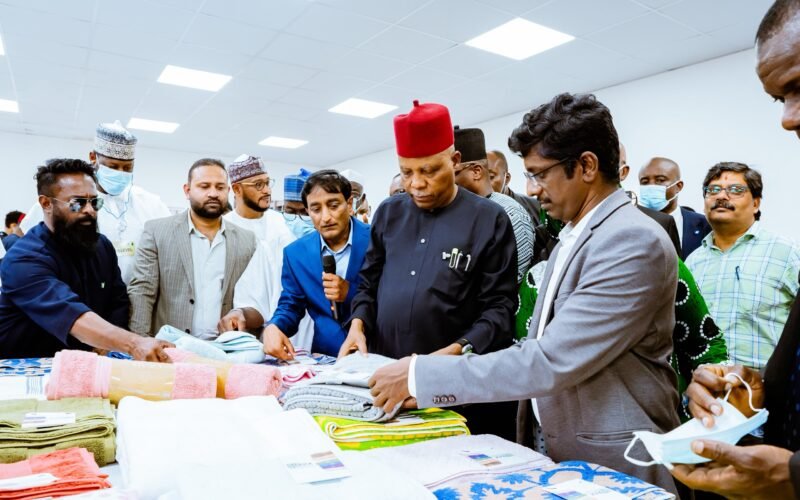
Shettima Says Nigeria Will Replicate Benin Agro-Industrial Model
Vice President Kashim Shettima says Nigeria will draw lessons from Benin Republic’s Glo-Djigbé Industrial Zone as the Fe…
 Business
Dangote Refinery Raises $2.5bn In Private Equity Placement
Dangote Petroleum Refinery and Petrochemicals says it has raised about $2.5 billion in fresh equity through a private pl…
 Business
Dangote Refinery Restores Naira Petrol Loading at ₦1,215 Per Litre
Dangote Petroleum Refinery has resumed naira-denominated petrol loading for marketers after a week-long suspension, sett…