Dangote Refinery Supplied 79% of Nigeria’s Petrol in April as Imports Fall 37%
 Amina Garba
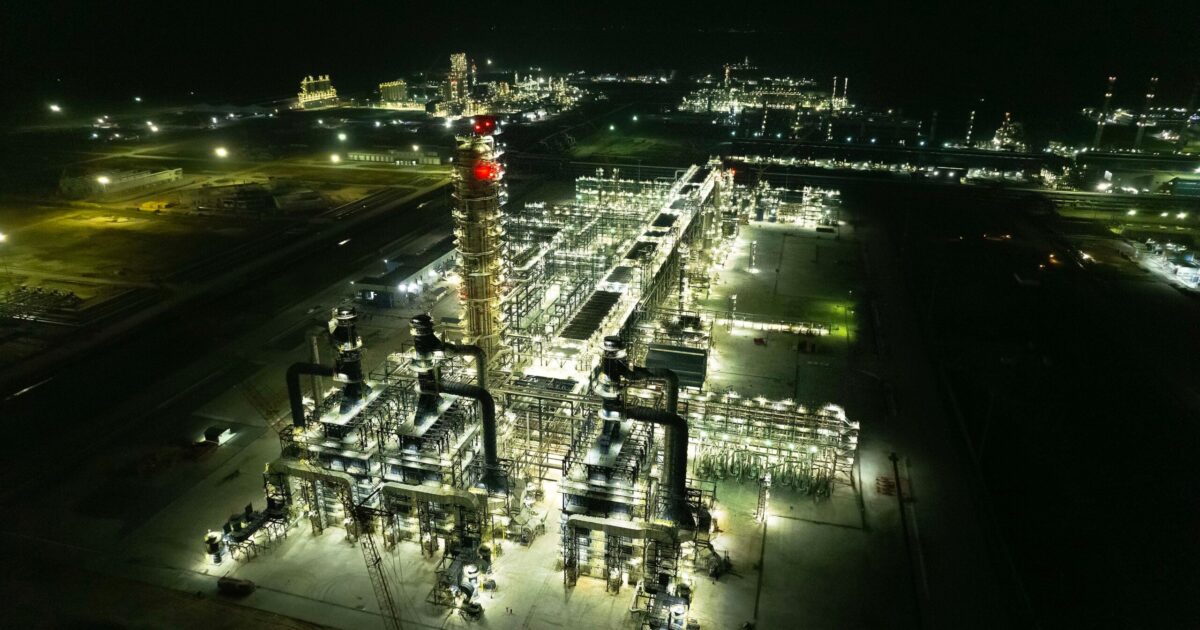
Dangote Petroleum Refinery supplied 79.64 percent of all petrol consumed in Nigeria in April 2026, as fuel imports fell by 37.3 percent — the clearest sign yet that Aliko Dangote’s refinery is reshaping how the country gets its fuel.
The Nigerian Midstream and Downstream Petroleum Regulatory Authority (NMDPRA) released these figures in its latest midstream and downstream statistics report on May 12, 2026. The numbers tell a story that would have seemed impossible two years ago.
Dangote Dominates Domestic Supply
Supply from the refinery jumped 19 percent in April, climbing from 34.2 million litres per day in March to 40.7 million litres per day. Nigeria consumed 51.1 million litres of petrol daily during the same period — meaning the Dangote refinery alone covered nearly four-fifths of that demand.
Petrol imports, by contrast, crashed from 5.9 million litres per day in March to just 3.7 million litres per day in April — a 37.3 percent drop. Imported crude oil fell even more sharply: down 95.65 percent to 0.41 million barrels in April from 9.43 million barrels the month before.
The NMDPRA said the refinery ran at 99.12 percent capacity and “achieved 100 percent utilisation for most of the days in April.” At its 650,000-barrel-per-day nameplate capacity, that is no small feat.
What the Refinery Is Producing
Beyond petrol, the refinery produced 23.6 million litres of diesel (AGO) and 22.9 million litres of kerosene/aviation fuel daily. Combined petrol supply from the refinery and imports reached 44.4 million litres per day in April, up 10.7 percent from March’s 40.1 million litres.
The government-owned Port Harcourt, Warri, and Kaduna refineries remained shut throughout April, contributing nothing. In the modular refinery segment, Edo Refinery posted the highest capacity utilisation at 79.2 percent, followed by WalterSmith at 56.14 percent.
Petrol Prices Amid the Shift
April was also a month of pricing turbulence. The refinery adjusted its gantry price at least five times as international crude prices moved. In early April it raised prices to about N1,275 per litre from N1,200 per litre.
By month-end, average retail prices stood at N1,271.50 per litre in Lagos, N1,326 in Abuja, and N1,371.50 in Maiduguri. National petrol stock sufficiency stood at 18 days, while diesel and aviation fuel covered 39 days and 70 days respectively.
Crude oil supply from Nigerian upstream companies to local refineries rose 56 percent to 17.99 million barrels in April, compared to 11.48 million barrels in March — another indication that domestic processing is picking up while import dependence shrinks.
Sources: TheCable, BusinessDay

Written by
Amina Garba
Financial reporter covering CBN policy, oil and gas, government budgets, and macroeconomic trends. Business Writer at NaijaTrend.
You May Also Like
 Business
NCC Begins Registration Of SIM-Enabled Devices, Targets Illegal Imports
The Nigerian Communications Commission has begun registering and authenticating SIM-enabled devices as it moves to tight…
 Business
NUPRC Threatens Revocation Of Idle Flare Gas Permits
The Nigerian Upstream Petroleum Regulatory Commission has warned that companies sitting on flare gas commercialisation p…
 Business
Reps Begin Probe Into N432bn Oil Revenue Debt
The House Public Accounts Committee is investigating debts owed to NMDPRA by NNPCL and oil marketers after audit finding…
 Business
Appeal Court Upholds Ex-NEXIM Bank MD Roberts Orya’s Fraud Conviction
The Court of Appeal in Abuja has upheld the fraud conviction of Roberts Orya, a former managing director of the Nigerian…