Senate Approves Tinubu’s $6bn Loan in Under 4 Hours — Nigeria’s Debt Set to Hit ₦155 Trillion
 Amina Garba
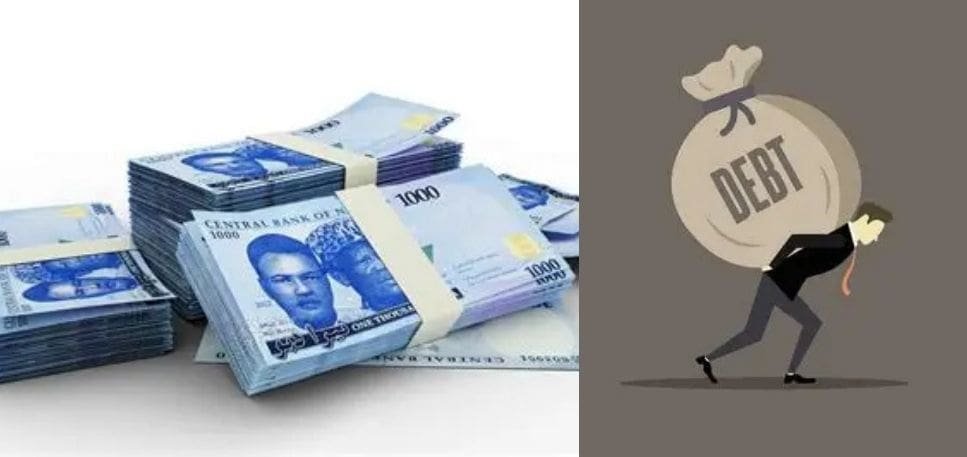
$5bn from Abu Dhabi, $1bn from UK for port rehab
The Senate has approved President Tinubu’s request to borrow $6 billion from external sources, pushing Nigeria’s total public debt toward ₦155.1 trillion. The approval came barely three and a half hours after Senate President Godswill Akpabio read the President’s letter at plenary.
The request was read for the first time, scaled through second reading, read a third time, and passed — all in the same sitting.
The borrowing breaks down into two parts. The larger chunk is a $5 billion Total Return Swap facility with First Abu Dhabi Bank in the United Arab Emirates. The smaller is a $1 billion UK Export Finance loan arranged through Citibank London for the reconstruction of the Lagos Port Complex and Tin Can Island Port.
What the $5bn facility looks like
Senator Aliyu Wammakko, who chairs the Committee on Local and Foreign Debts, told the chamber that the TRS facility is a derivative-based instrument governed by International Swaps and Derivatives Association rules. It will be drawn in tranches, collateralised by Naira-denominated Federal Government securities at 133.3 per cent over-collateralisation, marked-to-market monthly. Shortfalls trigger margin calls in US dollars.
The indicative pricing is SOFR + 3.95 per cent for the first tranche and SOFR + 4 per cent for subsequent tranches. The tenor is six years with a three-year break clause.
Of the proceeds, 40 per cent will fund capital projects in the 2025 and 2026 budgets. The rest goes to budget implementation, refinancing more expensive debt, and addressing urgent fiscal needs.
Atiku pushes back
Former Vice President Atiku Abubakar slammed what he called the “lightning-speed” approval, criticising both the executive request and the Senate’s willingness to rubber-stamp it in a single session.
Nigeria’s total public debt stood at approximately $103.20 billion (₦146.69 trillion) as of December 31, 2025. At the current exchange rate of ₦1,400 to the dollar, the $6 billion adds roughly ₦8.4 trillion. Experts warned that naira depreciation could push the actual figure even higher, and that the debt service-to-revenue ratio — already estimated at 60 per cent — will likely worsen.
The debt-to-GDP ratio of 36.92 per cent remains technically within the 60 per cent threshold set by the Debt Management Office, but that figure masks the real strain on government revenue.
Sources: Vanguard, Punch

Written by
Amina Garba
Financial reporter covering CBN policy, oil and gas, government budgets, and macroeconomic trends. Business Writer at NaijaTrend.
You May Also Like
 Business
NCC Begins Registration Of SIM-Enabled Devices, Targets Illegal Imports
The Nigerian Communications Commission has begun registering and authenticating SIM-enabled devices as it moves to tight…
 Business
NUPRC Threatens Revocation Of Idle Flare Gas Permits
The Nigerian Upstream Petroleum Regulatory Commission has warned that companies sitting on flare gas commercialisation p…
 Business
Reps Begin Probe Into N432bn Oil Revenue Debt
The House Public Accounts Committee is investigating debts owed to NMDPRA by NNPCL and oil marketers after audit finding…
 Business
Appeal Court Upholds Ex-NEXIM Bank MD Roberts Orya’s Fraud Conviction
The Court of Appeal in Abuja has upheld the fraud conviction of Roberts Orya, a former managing director of the Nigerian…