Nigeria’s Poverty Rate Hits 63% Despite Inflation Drop — World Bank
 Amina Garba
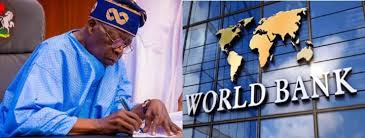
Nigeria’s poverty rate has climbed to a staggering 63 percent, affecting an estimated 140 million people, according to a new World Bank report — even as headline inflation declined sharply from 34.80 percent in December 2024 to 15.15 percent in December 2025.
The report, part of the World Bank’s Nigeria Development Update titled “Nigeria’s Tomorrow,” shows poverty rising steadily from 56 percent in 2023 to 61 percent in 2024, before hitting 63 percent in 2025. The trend paints a grim picture for a country that has been touting macroeconomic reforms as a success story.
Former Vice President Atiku Abubakar’s media aide, Phrank Shaibu, didn’t mince words in response, describing the figures as an “indictment” of President Tinubu’s economic direction. He called the surge from 40 percent poverty rate a “regression on a monumental scale.”
Shaibu pointed the finger squarely at the “abrupt removal of fuel subsidies” and the “chaotic devaluation of the naira,” arguing these policies were “executed without adequate safeguards for the Nigerian people.”
“Food prices have spiralled out of control, inflation has wiped out incomes, small businesses are collapsing, and millions more Nigerians are being pushed into extreme poverty,” he said. “A government that presides over a situation where the majority of its people are poor, yet insists that progress is being made, has lost both moral authority and economic direction.”
The World Bank did note that Nigeria’s economy strengthened in early 2026, driven by stabilisation reforms, and projects poverty will begin falling gradually from 2026, reaching about 59 percent by 2028 — assuming inflation continues to ease and macroeconomic conditions stabilise.
However, the Bank also warned that increased pre-election spending ahead of 2027 could undermine the gains from recent fiscal reforms and higher oil revenues.
For ordinary Nigerians, the gap between macroeconomic headlines and daily reality continues to widen. While inflation may be cooling on paper, the cost of living crisis remains very real — and the numbers now confirm what many have been feeling for months.

Written by
Amina Garba
Financial reporter covering CBN policy, oil and gas, government budgets, and macroeconomic trends. Business Writer at NaijaTrend.
You May Also Like
 Business
Nigeria, Cameroon Begin Joint Assessment Of Mfum-Ekok Border Post
Nigeria and Cameroon have started a joint assessment of the Ekok-Mfum One-Stop Border Post and launched a border moderni…
 Business
NCC Begins Registration Of SIM-Enabled Devices, Targets Illegal Imports
The Nigerian Communications Commission has begun registering and authenticating SIM-enabled devices as it moves to tight…
 Business
NUPRC Threatens Revocation Of Idle Flare Gas Permits
The Nigerian Upstream Petroleum Regulatory Commission has warned that companies sitting on flare gas commercialisation p…
 Business
Reps Begin Probe Into N432bn Oil Revenue Debt
The House Public Accounts Committee is investigating debts owed to NMDPRA by NNPCL and oil marketers after audit finding…