Nigeria Could Lose Ability to Track Aircraft as 20-Year-Old Radar System Nears Collapse
 Claudia Kane

Nigeria’s airspace surveillance system is on the verge of failure. The Total Radar Coverage of Nigeria — TRACON — commissioned in 2001 and fully deployed by 2010, has exceeded its operational lifespan and is now running without backup components, the Nigerian Airspace Management Agency has warned.
NAMA’s Managing Director, Engr. Farouk Ahmed Umar, raised the alarm during a visit by Mahmoud Adam Kambari, Permanent Secretary of the Ministry of Aviation and Aerospace Development, to the agency’s headquarters in Abuja. He stated that TRACON’s components are becoming obsolete, spare parts are no longer available, and most parts are operating without backup.
Running on Borrowed Time
High-tech aviation surveillance equipment typically lasts about 10 years. Nigeria’s TRACON system has been running for well over a decade past that threshold. The technology began falling behind global standards as far back as 2014, when countries around the world started switching to more advanced surveillance systems.
TRACON operates nine radar sites across Nigeria, combining Primary Surveillance Radar and Secondary Surveillance Radar to track and identify aircraft in real time. It was built in partnership with French defence contractor Thales Group. Two decades of use with no major upgrade has left the system degraded to the point where NAMA fears losing surveillance service entirely.
“The airspace is at the risk of losing surveillance service,” Umar said.
Money Problems Run Deep
The radar crisis sits inside a broader funding nightmare at NAMA. The agency has been charging airlines ₦11,000 per flight operation since 2008 — the same rate for 18 years — and faces pushback each time it attempts a review, according to the MD. Meanwhile, 30 percent of the agency’s internally generated revenue is deducted by the Federal Government.
Operational costs are climbing due to exchange rate pressures. NAMA spends heavily on fuel — Automotive Gas Oil and Premium Motor Spirit — just to keep existing equipment running. Manpower shortages and inadequate training for technical staff make things worse.
Permanent Secretary Kambari pledged the Ministry’s support, promising to reinstate regular top-level meetings between the Minister, permanent secretary, and agency heads. He also committed to prioritising staff welfare and improving Nigeria’s performance in future ICAO safety evaluations. But industry observers note that pledges without budgetary allocation mean little for a system that needs replacement, not repair.
Without urgent investment in modern surveillance infrastructure, Nigeria risks falling short of International Civil Aviation Organization standards and putting one of West Africa’s busiest airspaces in danger.
Sources: TheCable, Independent Nigeria, GistReel, Travel and Tour World

Written by
Claudia Kane
General assignment reporter and News Editor at NaijaTrend. Covers breaking news, security, and national affairs across Nigeria.
You May Also Like
Ondo Investigates Suspected Poisoning After 24 Deaths
Ondo State authorities are investigating the deaths of 24 people in Odigbo Local Government Area after residents reporte…
 News
News
Police Hunt Suspects After Mob Kills Man In Akwa Ibom
Akwa Ibom police say they have begun a manhunt after a mob allegedly beat and set ablaze an unidentified man accused of…
 News
News
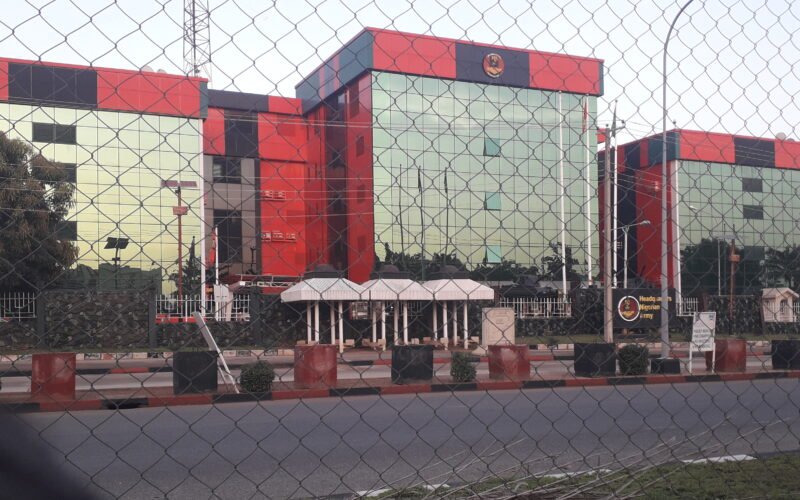
Nigerian Army Redeploys Generals, Names New Operation Hadin Kai Commander
The Nigerian Army has redeployed several senior officers and named Major General I. A. Ajose as Theatre Commander of Joi…
 News
News
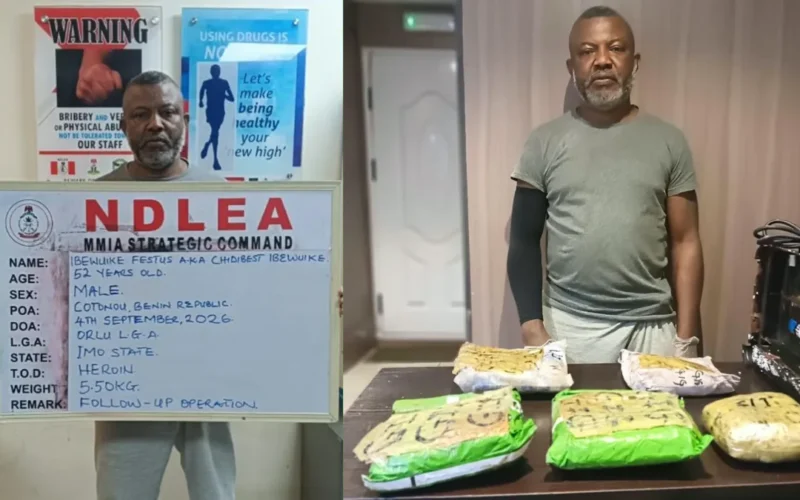
NDLEA Arrests Fugitive Kingpin Linked To 49.7kg Heroin Shipment
NDLEA says Festus Ibewuike was arrested in Benin Republic and returned to Nigeria after more than two years on the run.