Senate Confirms Enikanolaiye as Foreign Affairs Minister, Demands End to Passive Diplomacy
 Tunde Bakare
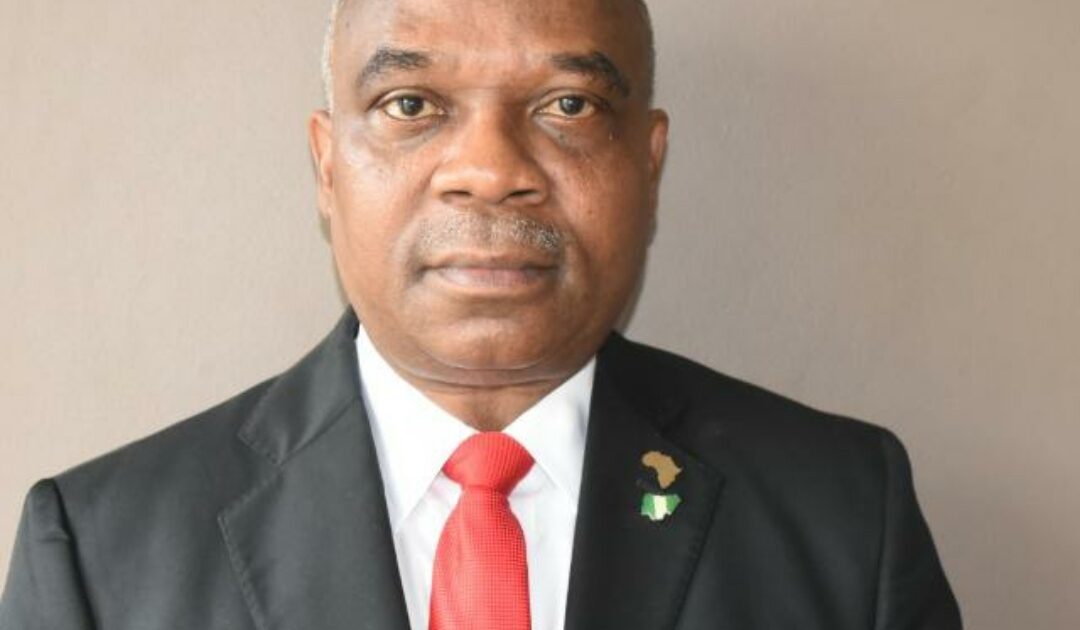
The confirmation
The Senate confirmed Ambassador Sola Enikanolaiye as Minister of State for Foreign Affairs on Wednesday. What could have been a routine exercise turned into something more pointed: a collective demand from lawmakers that Nigeria stop being a diplomatic pushover.
Enikanolaiye, who has spent roughly 40 years in the foreign service, came to the chamber ready to promise exactly that. His message was blunt.
“The solution to any issue is not to kill people in barbarous attacks. We will move beyond condemnation,” he told senators. The reference was clear — years of Nigerians being attacked, harassed, and killed abroad, particularly in South Africa and Ghana, while the government’s response rarely went beyond statements of “concern” and summoning ambassadors who never showed up.
Taking it to the AU
The new minister did not just promise to be tougher. He laid out a plan: escalate attacks on Nigerians to the African Union level and push for a coordinated continental response instead of dealing with each incident in isolation.
“What is happening goes beyond isolated cases of xenophobia. It is something more expansive that demands coordinated intervention at the African level,” he said.
His approach combines direct presidential engagement, parliamentary diplomacy, and multilateral pressure. In plain terms: Nigeria will stop just asking and start using whatever leverage it has.
“Diplomacy is not just about words. It also involves body language and the ability to demonstrate that a country has options. We must begin to act in ways that command respect,” he said.
The money problem
Enikanolaiye also raised something Nigeria’s diplomats complain about privately but rarely gets public attention: the country’s missions abroad are chronically underfunded.
“There is always a mismatch between what is approved and what is eventually released,” he said. When funds are delayed for months, local staff go unpaid, obligations are not met, and even diplomats’ children get their education disrupted.
Then there is the property problem. Nigeria owns more than 500 government properties worldwide, many abandoned or barely used. His proposed fix: a public-private partnership model to turn those assets into sustainable funding for missions. He said the Federal Executive Council already approved the framework — it just never got implemented.
High expectations
The Senate was not in the mood for status quo responses. Lawmakers raised concerns about missions lacking vehicles, owning prime properties that are falling apart, and a visa regime that makes it hard for foreigners to enter Nigeria — something that quietly undermines the country’s diplomatic and economic goals.
Senate Leader Opeyemi Bamidele called Enikanolaiye “a round peg in a round hole.” Senator Sani Bello, who chairs the Foreign Affairs Committee, said the nominee’s four decades of experience spoke for itself and strongly recommended confirmation.
The chamber’s message was not subtle: the new minister will be judged on results, not speeches. And after years of weak responses to attacks on Nigerians abroad, the patience for more of the same has run out.
Sources: ThisDay, BusinessDay, TheCable, The Sun, Punch

Written by
Tunde Bakare
Political journalist covering Nigerian politics, the National Assembly, and electoral developments. Political Editor at NaijaTrend.
You May Also Like
 Politics
Senate Warns MDAs Over Ignoring Oversight Invitations
The Senate has warned ministries, departments, agencies and government-owned enterprises that ignoring National Assembly…
 Politics
Timi Frank Asks Presidency To Publish Trump Letter To Tinubu
Former APC deputy national publicity secretary Timi Frank has asked the Presidency to publish the full letter it says Un…
 Politics
Atiku Faults Tinubu Over ₦22.15bn Palace Projects For Monarchs
Atiku Abubakar has criticised President Bola Tinubu over a reported ₦22.15bn allocation for palace projects for traditio…
 Politics
Court Stops EFCC Probe of Oyo Finances, Calls Inquiry Speculative
A Federal High Court in Ibadan has restrained the Economic and Financial Crimes Commission from proceeding with its prop…