State Police Push Reaches Critical Stage as National Assembly Advances Constitutional Reform
 Tunde Bakare
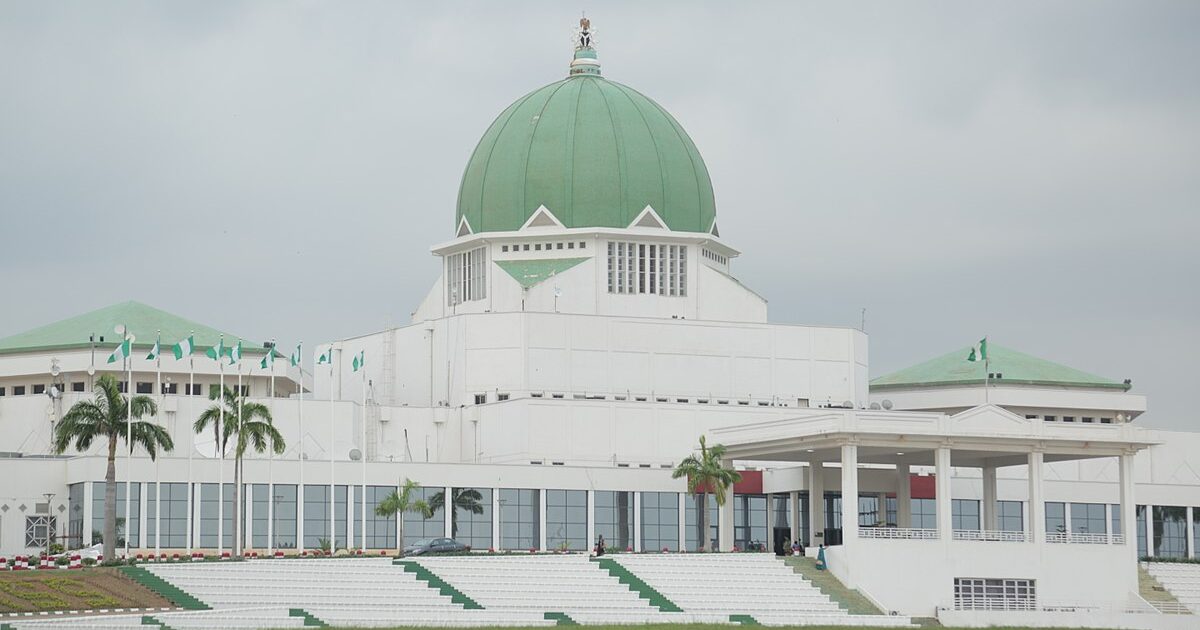
Nigeria’s long-running debate over state police has entered what many are calling its most consequential phase yet. The National Assembly is advancing constitutional amendments, and the Nigeria Police Force has submitted a full operational framework to lawmakers.
The drive to decentralise policing has been building throughout 2026, fuelled by insecurity across multiple regions and a growing admission that the current centralised model is not working for most Nigerians.
What the Framework Proposes
The core idea is to split the Nigeria Police Force into two bodies: a Federal Police Service and State Police Services across all 36 states.
The federal police would handle national security duties like counterterrorism, interstate crime, and critical infrastructure protection. State formations would deal with local security concerns, community-level crime, and intelligence gathering.
One of the most notable elements is the financing model. The plan calls for a State Police Fund, backed by mandatory state government contributions and a constitutional provision allocating three percent of the Federation Account to support state policing operations.
That financing structure is aimed at one of the oldest problems with Nigerian policing: chronically inadequate and unpredictable funding that has left officers under-equipped and understaffed for decades.
The Abuse Question
The biggest objection to state police has always been the fear that governors would use police forces as a weapon against political rivals. Given Nigeria’s political landscape, where competition is fierce and institutional safeguards are often thin, this is a real concern.
Senate Leader Opeyemi Bamidele has acknowledged the risk. He said the National Assembly is deliberately building accountability mechanisms into the framework, including provisions to strengthen justice administration and protect fundamental human rights.
The proposed amendments would alter Section 214 of the 1999 Constitution, move policing to the Concurrent Legislative List, and introduce a new Section 214A to establish national oversight of state forces.
Miyetti Allah Cattle Breeders Association and the pan-Yoruba group Afenifere have both pushed for strong safeguards. Miyetti Allah president Baba Ngelzarma said state police could help with insecurity, but clear constitutional provisions must prevent misuse.
Timeline and Next Steps
The Senate has pledged to deliver the constitutional amendment by the end of 2026. Deputy Senate President Barau Jibrin, who chairs the Constitution Review Committee, said the process has entered its concluding phase with no further submissions being entertained.
The committee’s work has included six zonal public hearings, three technical retreats, and consultations with governors, political party leaders, security agencies, traditional rulers, women’s groups, and civil society organisations.
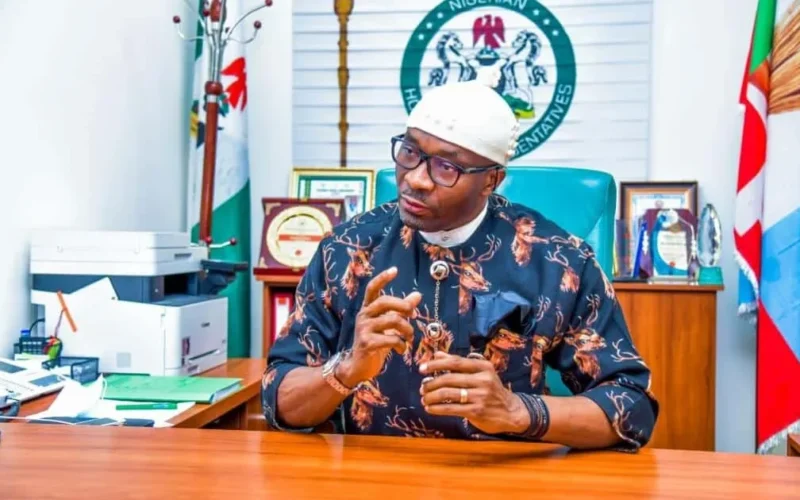
Deputy Speaker Benjamin Kalu described the current stage as the moment to move “from deliberation to decision, from consultation to legislative action, from debate to delivery.” He also pointed out that the success or failure of the review will not be decided in Abuja but in the 36 state assemblies, whose two-thirds approval is required under Section 9 of the Constitution.
The IGP submitted the police force’s formal operational framework to the Senate Committee on Police Affairs in late March.
Why Now?
Nigeria’s security problems have become impossible to ignore. Insurgency in the Northeast, banditry in the Northwest, communal violence in the Middle Belt. The limits of a unitary policing model designed for a very different era are on full display. Response times are slow, intelligence is often poor, and public trust in law enforcement keeps dropping.
As BusinessDay columnist Olusegun Dada put it: “We are living in a 2026 reality that the 1999 Constitution was never built to sustain. To continue clinging to a purely centralised security model is not just an administrative choice; it is a structural failure.”
Whether the political will holds remains the open question. But for the first time in years, there is a real chance the answer is yes.
Sources: TheNigerian, Punch NG, ThisDay Live, Information NG, BusinessDay, ConstitutionNet, PR Nigeria

Written by
Tunde Bakare
Political journalist covering Nigerian politics, the National Assembly, and electoral developments. Political Editor at NaijaTrend.
You May Also Like
 Politics
Trump Letter To Tinubu Puts Nigeria Security Ties Back In Focus
A letter from United States President Donald Trump to President Bola Tinubu has put security cooperation between Abuja a…
 Politics
Reps Step Down Edible Oil Bill After Lawmakers Raise Concerns
The House of Representatives has stepped down a bill that sought to ban the production, importation, distribution and sa…
 Politics
Ogun Assembly Clears Former Speaker Oluomo Of Embezzlement Allegation
The Ogun State House of Assembly has cleared former Speaker Olakunle Oluomo of an embezzlement allegation connected to h…
 Politics
Kalu Says Bende Church Outreach Allocation Is N780m, Not N1bn
Deputy Speaker of the House of Representatives Benjamin Kalu has said the allocation tied to church outreach in Bende is…