Nigeria’s Public Debt Hits ₦159.28 Trillion — Nearly Doubled in Two Years, Says DMO
 Amina Garba
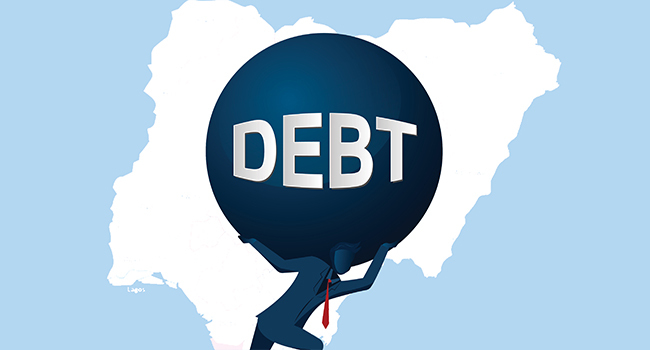
Nigeria’s total public debt has surged to ₦159.28 trillion as of December 31, 2025, according to fresh data released by the Debt Management Office. The figure represents a quarter-on-quarter increase of ₦5.98 trillion (3.9%) from ₦153.29 trillion in September 2025, and a year-on-year jump of ₦14.61 trillion (10.1%) from ₦144.67 trillion in December 2024.
In dollar terms, the debt stock rose to $110.97 billion, reflecting a $7.04 billion increase within the quarter alone. On a per-capita basis, every Nigerian now carries approximately ₦66,250 in national debt — a figure that rises to over ₦724,000 when broader obligations are factored in.
The Breakdown
Domestic debt remains the larger component, accounting for 53.27% of total public debt at ₦84.85 trillion. External debt stands at ₦74.43 trillion (46.73%). The Federal Government is the dominant borrower: its domestic debt rose from ₦77.81 trillion to ₦80.49 trillion in the quarter, while states and the FCT added just ₦360 billion in domestic borrowing.
External debt increased from $48.46 billion to $51.86 billion in the quarter, partly moderated by exchange rate movements — the DMO applied an official rate of ₦1,435.26/$ for December 2025, compared to ₦1,474.85/$ for September.
Why It Matters
Nigeria’s debt has nearly doubled in two years. At the end of 2023, total public debt stood at approximately ₦87.9 trillion. Less than two years later, it has crossed ₦159 trillion. The government is borrowing more, faster, than at any point in recent history.
The IMF’s downgrade of Nigeria’s growth forecast to 4.1%, combined with rising inflation (15.38% in March), creates a painful squeeze: more debt, slower growth, and higher prices. Servicing this debt already consumes over 90% of revenue in some quarters. Every naira borrowed is a naira that must be repaid with interest — and the interest rates on domestic borrowing are punishing.
Finance Minister Wale Edun argues that rising crude production (1.8 million bpd) and the current oil price surge ($113/b for Nigerian crude) provide fiscal space. But oil revenues are volatile by nature, and the current premium is a direct result of the Iran war. If the conflict de-escalates and prices normalise, the fiscal cushion disappears — but the debt remains.
Sources: Punch, Channels TV, Guardian Nigeria

Written by
Amina Garba
Financial reporter covering CBN policy, oil and gas, government budgets, and macroeconomic trends. Business Writer at NaijaTrend.
You May Also Like
 Business
Nigeria, Cameroon Begin Joint Assessment Of Mfum-Ekok Border Post
Nigeria and Cameroon have started a joint assessment of the Ekok-Mfum One-Stop Border Post and launched a border moderni…
 Business
NCC Begins Registration Of SIM-Enabled Devices, Targets Illegal Imports
The Nigerian Communications Commission has begun registering and authenticating SIM-enabled devices as it moves to tight…
 Business
NUPRC Threatens Revocation Of Idle Flare Gas Permits
The Nigerian Upstream Petroleum Regulatory Commission has warned that companies sitting on flare gas commercialisation p…
 Business
Reps Begin Probe Into N432bn Oil Revenue Debt
The House Public Accounts Committee is investigating debts owed to NMDPRA by NNPCL and oil marketers after audit finding…