FG Cancels $717 Million World Bank Power Loan as Blackouts Deepen
 Claudia Kane
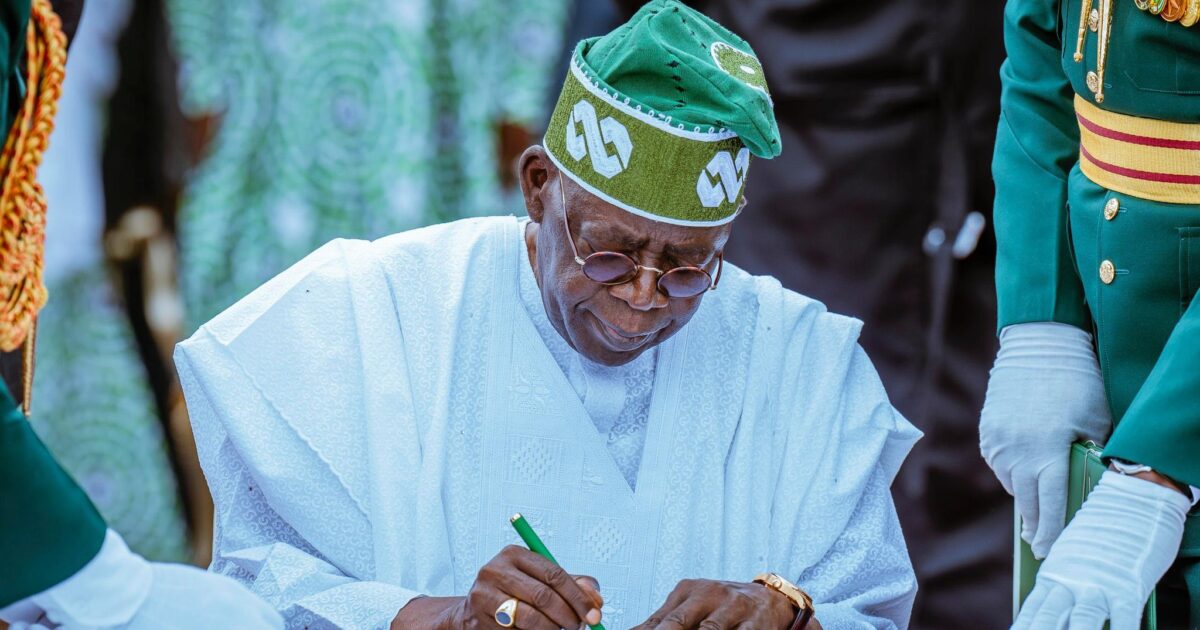
The Federal Government has cancelled the remaining $717 million in undisbursed World Bank funding for Nigeria’s electricity sector, bringing an abrupt halt to a $1.52 billion power recovery programme. Officials say the programme delivered little value after $800 million had already been spent.
Minister of Power Adebayo Adelabu announced the decision on Monday. An audit of the programme showed “limited measurable impact” on electricity supply or revenue collection despite three years of disbursements.
“We have spent $800 million from the initial $1.52 billion, and we cannot point to any meaningful improvement in supply or revenue collection,” Adelabu said. “The sector’s problems are not about lack of funds but about governance and operational efficiency. We will cancel the remaining $717 million and focus on fixing the fundamentals.”
Grid Collapses and Generation Decline
Nigeria has suffered five national grid collapses in 2026 alone, with average daily power generation dropping below 3,200 megawatts (down from 4,000 to 4,500 MW in 2023). Urban households receive an average of six hours of supply daily; rural areas get as little as two hours.
The World Bank programme, approved in 2022, was designed to support structural reforms leading to a financially viable electricity market. But persistent tariff shortfalls (estimated at N2.3 trillion in 2025) and collection efficiency below 60 percent at the Distribution Companies (DisCos) undermined its impact.
Daily Trust reports that DisCos collectively owe N3.8 trillion to the Nigerian Bulk Electricity Trading Plc (NBET) and the Transmission Company of Nigeria (TCN).
Presidential Approval
President Bola Tinubu approved the cancellation after Adelabu submitted the audit findings. Presidential spokesperson Bayo Onanuga said the President “fully supports the Minister’s decision and has directed that the Ministry of Power submit a roadmap for fixing the sector without additional concessionary borrowing.”
Adelabu had earlier floated the idea in an interview with Nairametrics, saying: “We cannot keep borrowing without visible improvement. I have directed my team to engage the World Bank on a possible restructuring or outright cancellation of the balance of this facility.”
World Bank Response
World Bank Country Director for Nigeria, Dr. Ndiame Diop, said the institution respects Nigeria’s decision and noted that the undisbursed funds could be reallocated to other priority projects within the country.
“The loan was designed to support structural reforms that would ultimately lead to a financially viable electricity market,” Diop said in a statement. “Nigeria remains committed to these reforms, but we respect the sovereign decision of the government.”
An anonymous World Bank official told ABN TV that the undisbursed funds “can be reprogrammed within 60 days if formal cancellation is received.”
Impact on Consumers
The cancellation immediately halts planned investments under the programme, including a 5 million meter rollout intended to close the metering gap and improve DisCo revenue collection. Planned grid upgrades and substation rehabilitation projects are also frozen.
NERC Vice Chairman Musiliu Oseni warned the cancellation will require a review of the tariff path and subsidy framework. “If the expected concessional funding for metering and capex disappears, DisCos will find it even harder to improve service,” he said.
The annual electricity subsidy in the 2026 budget stands at N1.6 trillion.
Power consumers are bracing for further deterioration. “They say they have spent $800 million, but we still have no light for 18 hours a day,” Chinedu Okafor, a resident of Ikeja, Lagos, told ABN TV. “Maybe this cancellation will force them to do the right thing. But I fear it may only get worse before it gets better.”
Sources: Nairametrics, Daily Trust, ABN TV

Written by
Claudia Kane
General assignment reporter and News Editor at NaijaTrend. Covers breaking news, security, and national affairs across Nigeria.
You May Also Like
 News
News
Tinubu Approves 12-Division Army Structure, 28,000 New Recruits
President Bola Tinubu has approved four new Nigerian Army divisions and 28,000 additional recruits, according to multipl…
 News
News
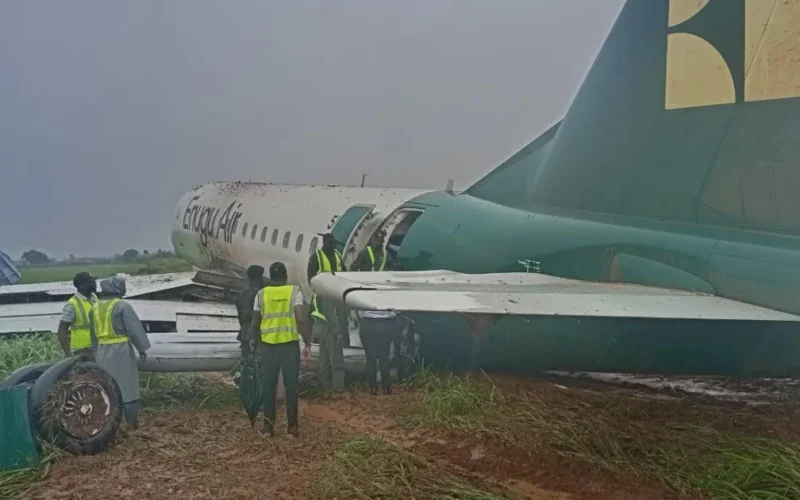
NSIB Opens Probe After Enugu Air Plane Skids Off Benin Runway
The NSIB has opened an investigation after an Enugu Air Embraer E170 overran the end of Runway 05 at Benin Airport. Offi…
 News
News
DSS To Appeal Life Sentences In Oyo School Abduction Case
The Department of State Services says it will challenge the life sentences handed to three men linked to the abduction o…
 News
News
Court Declines Immediate Review Of Bello Bodejo’s ₦2bn Bail Terms
A Federal High Court in Abuja has declined to immediately hear Bello Bodejo’s request to review the ₦2 billion bail cond…